A community is not only defined by the way it looks but also by what it encompasses. The environment of a community is impacted by social, political, and structural factors, and where you live matters. Neighborhoods that have high poverty, limited green space, pollution and unhealthy food environments can greatly impact a family’s, especially children’s, overall health. These systemic barriers can affect families physically and mentally, causing higher rates of asthma, obesity, and physical and emotional stress.
Housing and family health research continuously supports the need for expanded housing access in combination with public health approaches that provide safe and healthy housing for families with children.
At the Baltimore Regional Housing Partnership (BRHP), we believe this is one of the many reasons why opportunity areas are important. In addition to providing access to improved health outcomes, opportunity areas have quality schools, low-poverty rates, employment opportunities, and many other factors that make them well situated for any family. A now-published study by economists Dionissi Aliprantis and Stefani DeLuca, Unlocking Opportunity – The Remarkable Success of the Baltimore Regional Housing Partnership, reveals that families participating in the Baltimore Housing Mobility Program move from neighborhoods ranked among the lowest in the region to communities with dramatically higher socioeconomic status (SES) while also gaining access to better performing schools and more integrated communities.
Importantly, when families move to opportunity areas, they can positively impact their health and wellbeing.
Our Healthy Children Voucher Demonstration (HCD) Program is a partnership between BRHP, the Housing Authority of Baltimore City, Johns Hopkins University and health care providers. Its purpose is to enhance the wellbeing of families through health-focused housing mobility, serving up to 150 Baltimore City families with children and helping them make moves to better quality housing that improve their health outcomes.
“It has been more than a pleasure aiding our HCD participants with moving into opportunity areas with ample resources that benefit their families. These communities provide better employment opportunities, community resources, after-school programs, summer enrichment for children, and mental health resources as well,” shares JaNay DeVaughn, Client Services Navigator at BRHP.
Voicing her joy in working with families in the HCD program, JaNay reflects, “The reactions I have experienced from our families have been nothing but positive! Parents feel like they can provide a better quality of life for their children and provide for them in ways they thought they never could. The impact is outstanding and I love being the person to advocate for our participants and assist them on this journey.”
Recently, BRHP staff attended the Housing Is Summit convened by the Council of Large Public Health Authorities (CLPHA), presenting on the HCD program with Johns Hopkins School of Public Health researchers Craig Pollack and Laken Roberts. The workshop session discussed the research findings of the Mobility Asthma Project (MAP), which demonstrated the improved health impacts associated with moving to a new opportune neighborhood, and how this inspired the development of the HCD program. The ensuing partnerships between housing and healthcare providers in the Baltimore region continues with the HCD program today, assisting families in their move to healthier neighborhoods to improve the health of their children.
Families deserve environments that satisfy their needs in all areas of their lives. Whether it is health, education, or economically, opportunity areas can help families succeed.
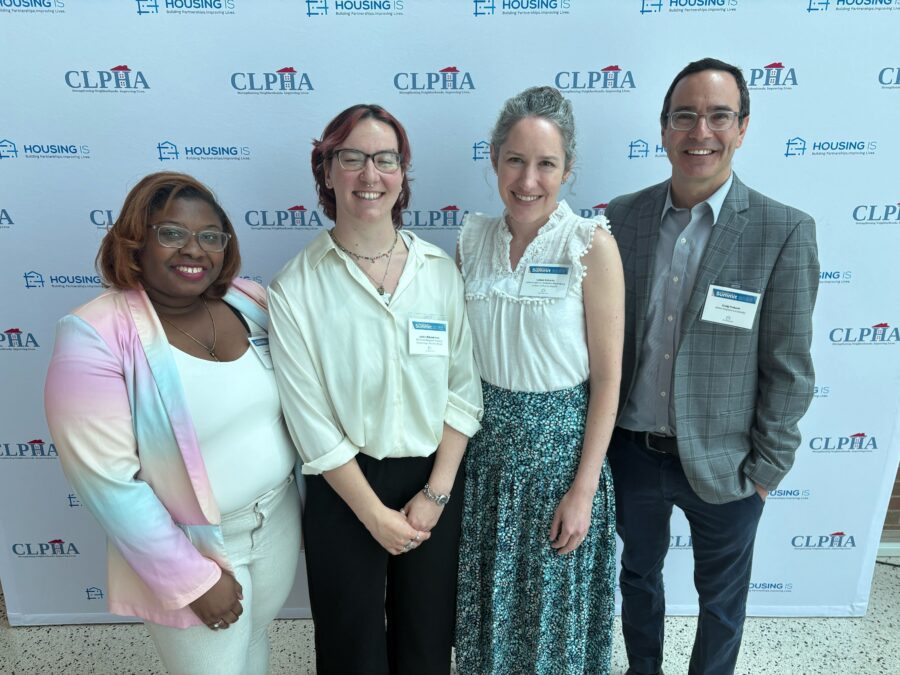
BRHP staff alongside Craig Pollack and Laken Roberts at the Housing Is Summit convened by the CLPHA.
Written by: Savanah Winn, Communications Associate