Stay Updated
Join our mailing list to stay informed on how we're creating pathways to opportunity.
At the Baltimore Regional Housing Partnership (BRHP), we see every day what stable housing makes possible. When families have a safe, affordable place to call home, children succeed in school, parents advance in their careers, health improves, and futures begin to open up.
That’s why we are proud to celebrate the passage of HB 315 / SB 335, a landmark piece of legislation, introduced by Delegate Vaughn Stewart (D-19) and Senator Sara Love (D-16), that strengthens Maryland’s fair housing laws by ending harmful credit-based screening practices for tenants who use income-based housing subsidies, including Housing Choice Vouchers.
This law brings Maryland closer to fulfilling the promise of the HOME Act and ensures that housing assistance can actually be used by the families it is meant to serve.
We work closely with families as they search for housing, and we hear the same story again and again. Even with guaranteed rental assistance, families are routinely denied housing because of credit screening requirements that have nothing to do with their ability to pay rent.
Credit scores were designed to predict repayment of loans. They rarely include rental payment history and often reflect periods of instability that occurred before a household received housing assistance. For voucher holders, this is especially problematic. Public housing authorities and other voucher administrators already verify income, determine affordability, cap tenant rent contributions to 30% of income, and adjust subsidies when income changes. In practice, vouchers significantly reduce risk and create remarkably stable tenancies.
Yet rigid credit screening has continued to block assisted families from accessing housing, regardless of their qualifications and the stability created by the housing subsidy. These practices have contributed to declining voucher success rates in Maryland, even after source-of-income protections were enacted.
HB 315 / SB 335 provides a narrow, practical solution that aligns tenant screening with reality. It ensures that screening criteria are relevant to assisted housing and grounded in real indicators of tenancy success.
Under the new law:
-Housing providers may not deny tenants with income -based housing subsidies based solely on a credit score or lack of a credit score.
-Providers may not rely on negative credit events from before a household began receiving assistance, which can be determined by the voucher provider.
-Landlords may continue to screen for rental history, lease compliance, eviction records, tenant portion of income, nuisance behavior, and property damage.
In plain terms, the law asks landlords to focus on what matters most: factors that indicate whether rent is likely to be paid, rather than irrelevant information that does not reflect the current financial stability provided by the housing subsidy.
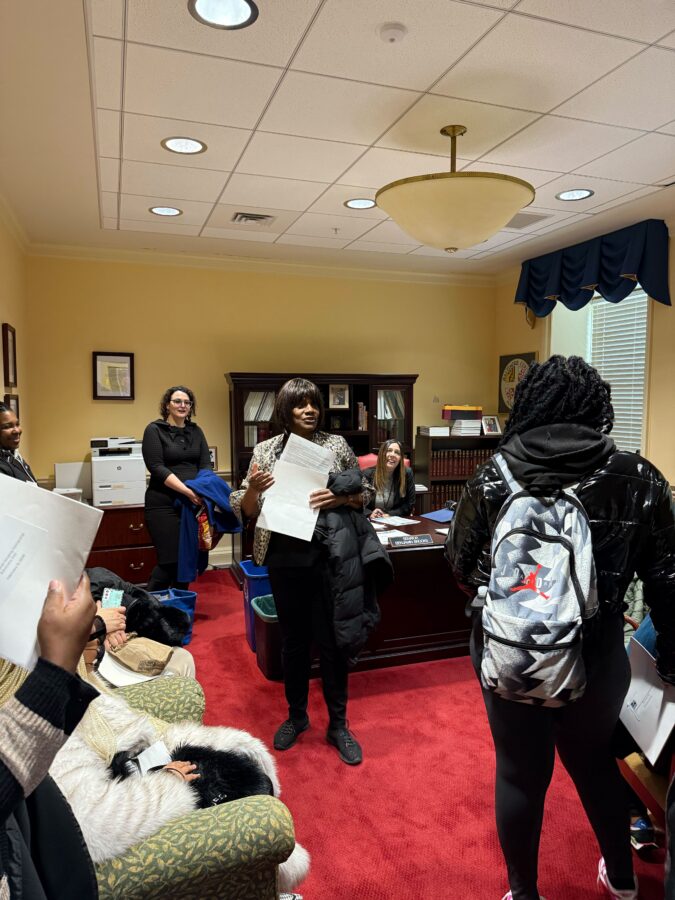
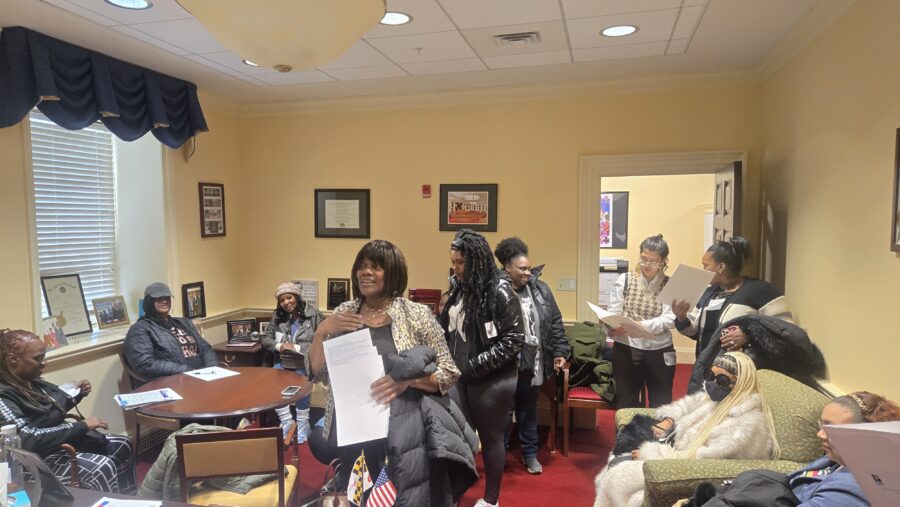
The passage of this legislation was driven in large part by the lived experiences of families in programs like ours. They are mothers working multiple jobs, students completing nursing and software engineering programs, survivors of homelessness and domestic violence, caregivers managing health crises, and parents doing everything possible to provide stability for their children. These women bravely shared their stories again and again with policymakers, standing in as representatives for thousands of families around the state. As Kiarra G., one of our participants, powerfully shared during a hearing on the legislation, “I had horrible credit; not because I was careless, but because I was never taught the importance of responsible credit use, and because loss of work and homelessness took a toll that followed me on paper.”
Housing Choice Voucher holders make up a small percentage of Maryland renters, but the impact of stable housing is far-reaching. Families remain housed, landlords receive reliable rent payments, and communities benefit from reduced displacement and increased opportunity. For individual families, housing stability is the foundation that leads to brighter futures.
As Kiarra shared, “Getting housing through BRHP wasn’t just about a roof over our heads. It gave us stability. It gave us the breathing room to rebuild. For the first time, I was finally able to provide my daughter with the kind of life I wanted her to have.”
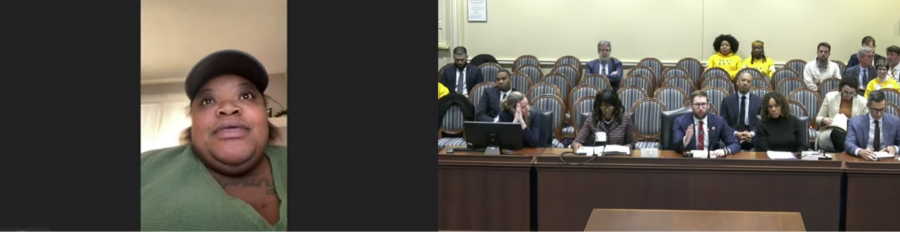
Kiarra testifying at the HB 315 hearing
HB 315 / SB 335 recognizes what we see every day: housing assistance works when families are allowed to use it.
At BRHP, we remain committed to working with housing providers, policymakers, and partners across the state to support thoughtful implementation of this law and to expand access to safe, stable housing in communities of opportunity.
When families are given a fair chance at housing, they build stronger futures and stronger communities for us all.
For the full list of the legislation BRHP supported in the 2026 Legislative Session and its outcome, click here.


By Emily Hovermale, External Affairs Director