Stay Updated
Join our mailing list to stay informed on how we're creating pathways to opportunity.
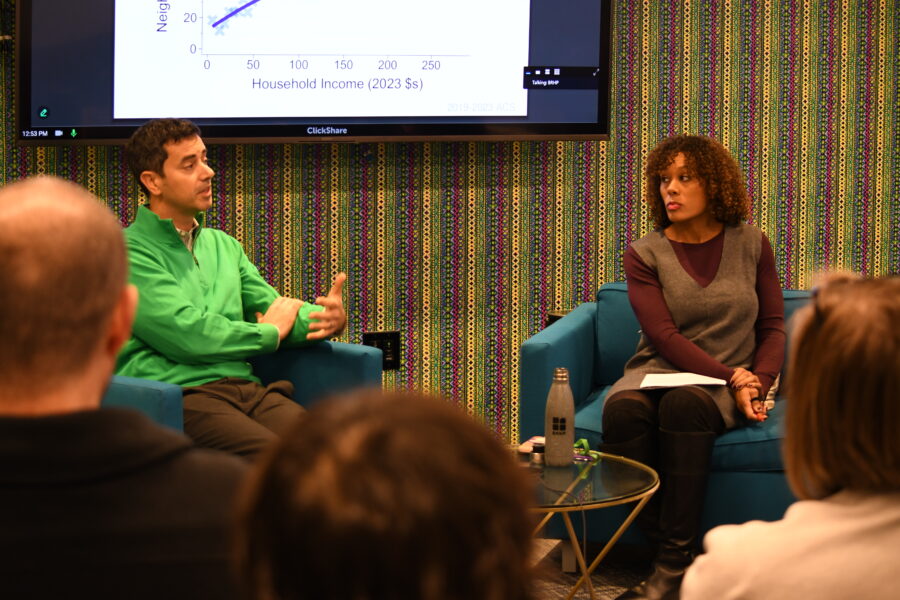
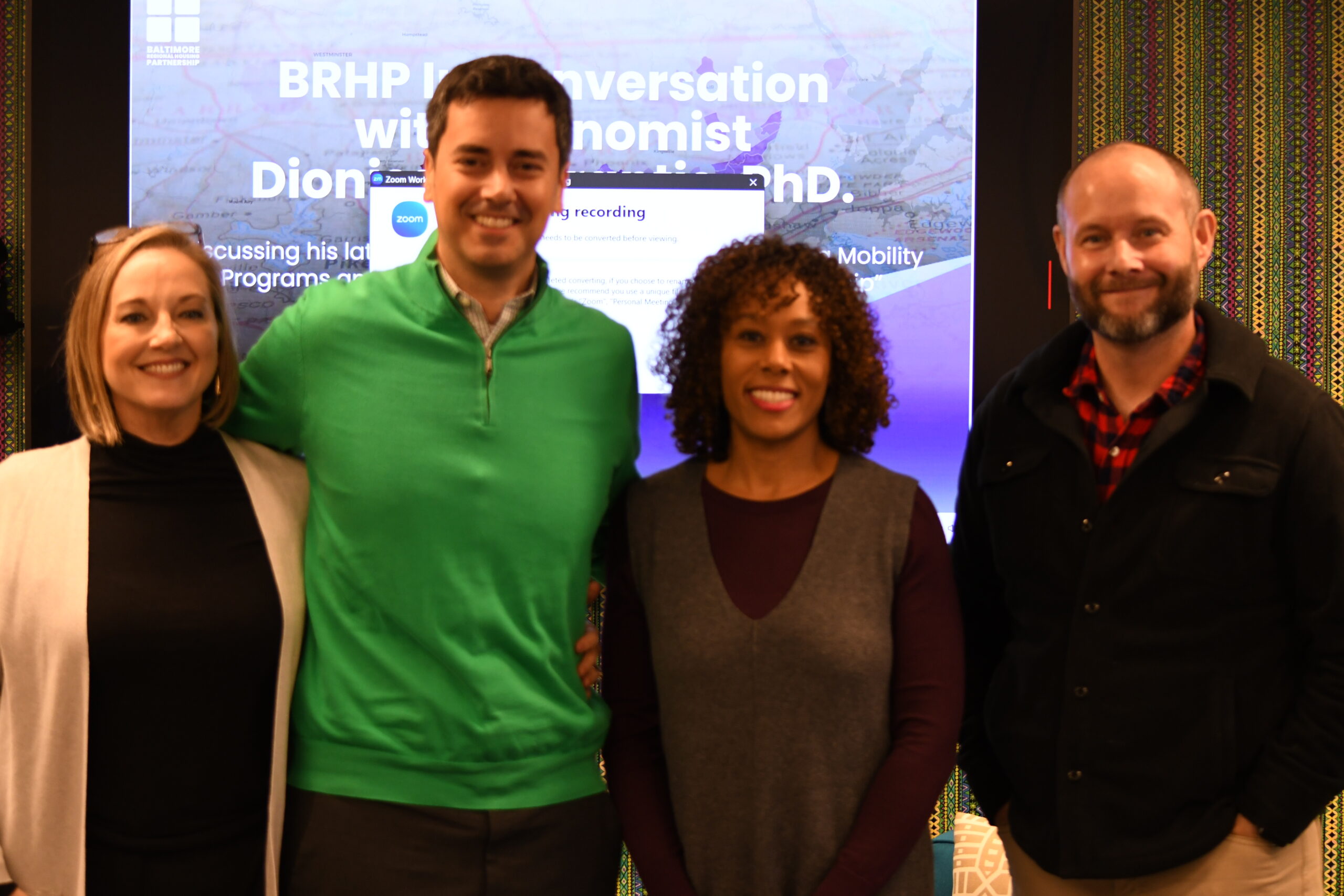
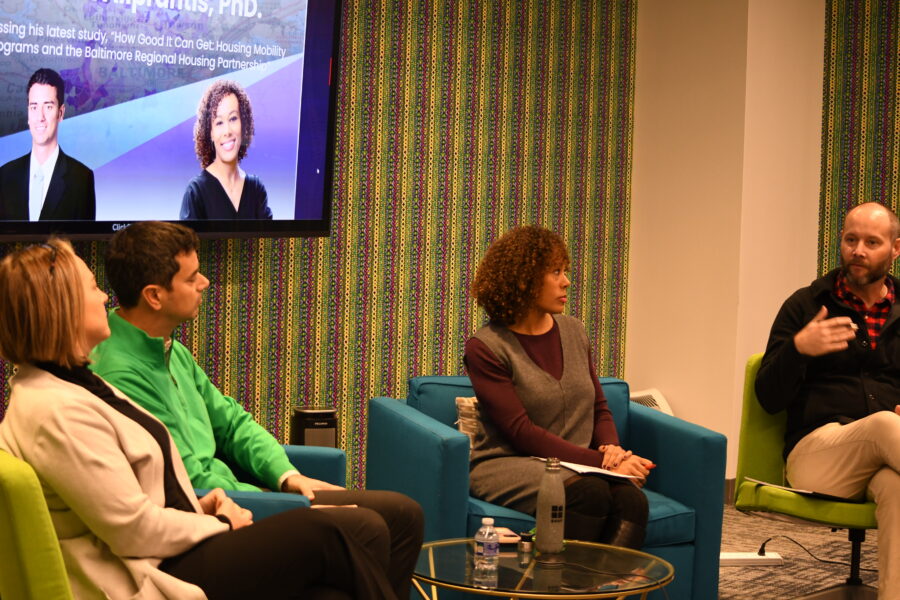
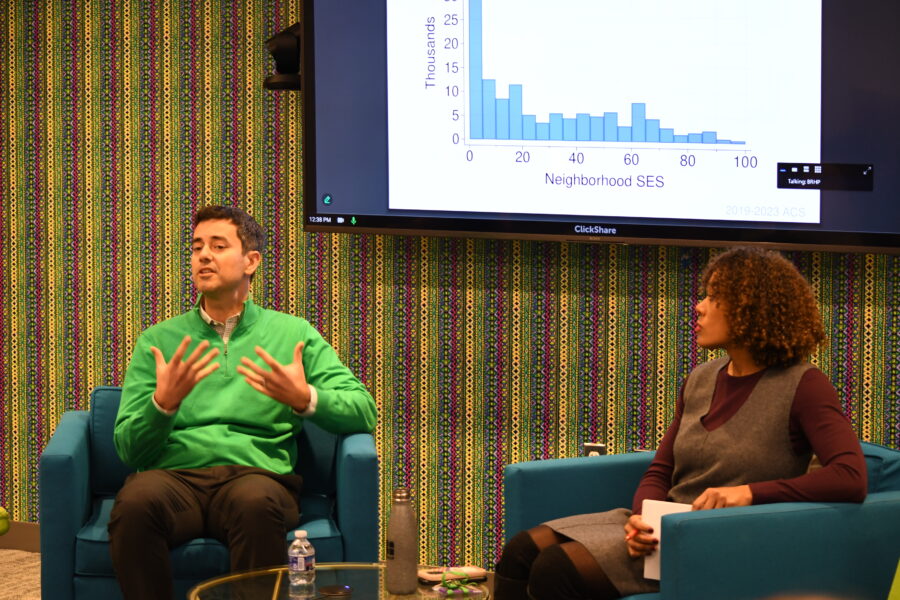
On December 2, BRHP Executive Director Adria Crutchfield hosted our final BRHP In Conversation event of the year, featuring economist Dionissi Aliprantis alongside research collaborators Dr. Stefanie DeLuca and Pete Cimbolic discussing their soon-to-be released research paper, “How Good It Can Get: Housing Mobility Programs and the Baltimore Regional Housing Partnership.” The event brought together housing-mobility practitioners, researchers, and BRHP participants and property partners to hear a discussion from the researchers on what drives success in housing mobility programs, and how we at BRHP can harness those insights to further our mission.
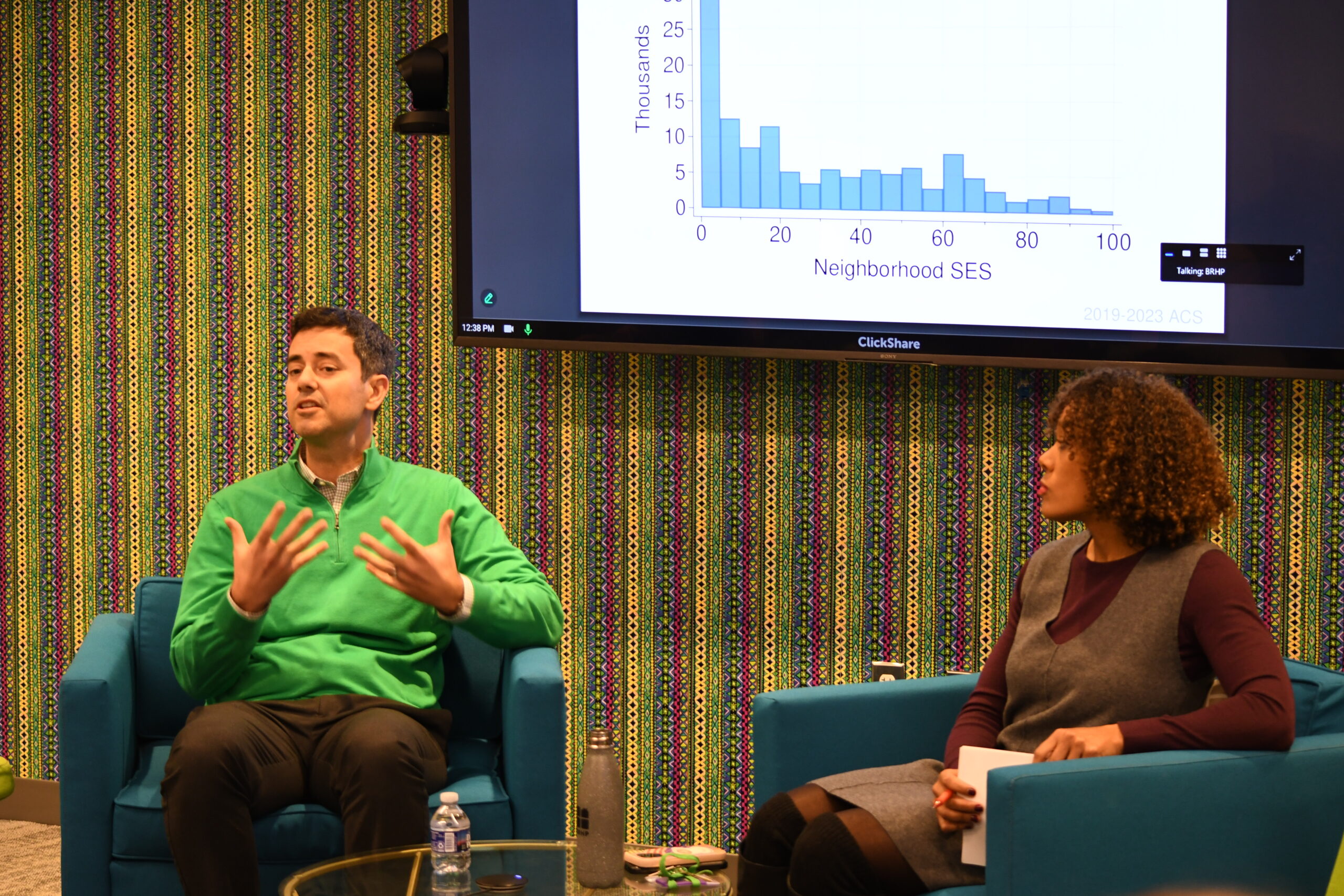
Aliprantis shared findings that underscore the transformative impact of the Baltimore Housing Mobility Program:
Massive Neighborhood Improvements: Families participating in the Baltimore Housing Mobility Program move from neighborhoods ranked among the lowest in the region to communities with dramatically higher socioeconomic status (SES). These moves exceed improvements seen in other prominent programs like Gautreaux and Moving to Opportunity.
“The thing that’s really remarkable about Baltimore is just the magnitude of changes in neighborhoods.” — Dionissi Aliprantis
Better Schools, Better Futures: In Maryland, schools in the lowest-ranked neighborhoods typically perform at the 10th percentile statewide, while those in the highest-ranked neighborhoods reach the 80th percentile. BRHP families gain access to schools performing higher than those available to poor Black families in Baltimore City – 1.7 grade levels higher for 4th grade – a change that can shape long-term educational and economic outcomes.
“Housing policy can achieve what decades of education policy have struggled to deliver: meaningful improvements in school quality.” – Stefanie DeLuca
Regional Design Creates Choice: While well-documented practices like pre-move counseling, extended search times, and post-move support are critical, Aliprantis’ research finds that the regional design of the program accounts for two-thirds of its success, because opportunity neighborhoods aren’t confined to Baltimore City. By spanning the region, Baltimore Housing Mobility Program opportunity areas give families real choices.
As Aliprantis shared, the Baltimore metro area is home to roughly 130,000 poor Black residents, most concentrated in the lowest-ranked SES neighborhoods. Poor white Baltimoreans, by contrast, are more evenly distributed across all SES tracks. Even at the same income levels, Black and White households live in very different neighborhoods. At the highest incomes, Black households live in neighborhoods about 20 percentile points lower in SES than their White counterparts, and the gap widens as incomes decrease.
BRHP is reversing this trend, helping poor Black families access higher-opportunity neighborhoods at rates that outperform both the overall Housing Choice Voucher program and the rental market. As Aliprantis noted:
“Despite the fact that there’s clearly this very strong force, this tide we’re fighting against, BRHP somehow is finding incredible success and allowing participants to navigate to these opportunity neighborhoods in a way that is just really remarkable.”
Families are not just moving to higher-SES neighborhoods. They are doing so while maintaining cultural and social preferences, such as living in communities with a higher Black share, without sacrificing access to opportunity.
Residential segregation and concentrated poverty remain pressing challenges in Baltimore and across the U.S. BRHP’s work demonstrates that housing policy can achieve what other interventions for these families often fail to: meaningful improvements in school quality, neighborhood safety, and long-term opportunity for families.
As Aliprantis reminded us:
“Why do we care about all of this? We care about the individuals participating in the program and how we improve their outcomes.”
Dr. DeLuca added:
“It’s possible to provide choice for families who have been cheated of such choices historically and individually.”
The conversation also raised important questions: Why do some families still face barriers to the highest-opportunity neighborhoods? Future research will combine quantitative analysis with qualitative interviews to understand factors impacting neighborhood selection such as credit screening, landlord practices, and neighborhood preferences.
At the same time, future research will look further into what the impact of these moves to higher SES neighborhoods means for the families in our program. As BRHP Managing Director of Research and Innovation, Pete Cimbolic, shared, “I’m really, really excited to see what this means in terms of the impacts on households, the children, their long-term outcomes. What is the impact for that child, for that family?”
BRHP remains committed to evidence-based practices, bold collaboration, and thoughtful, community-centered mobility work as this conversation and the research continues. We look forward to the publication of the full research findings in the near future.
To watch the full BRHP In Conversation, check out the replay on our YouTube channel here.
By Emily Hovermale, External Affairs Director